
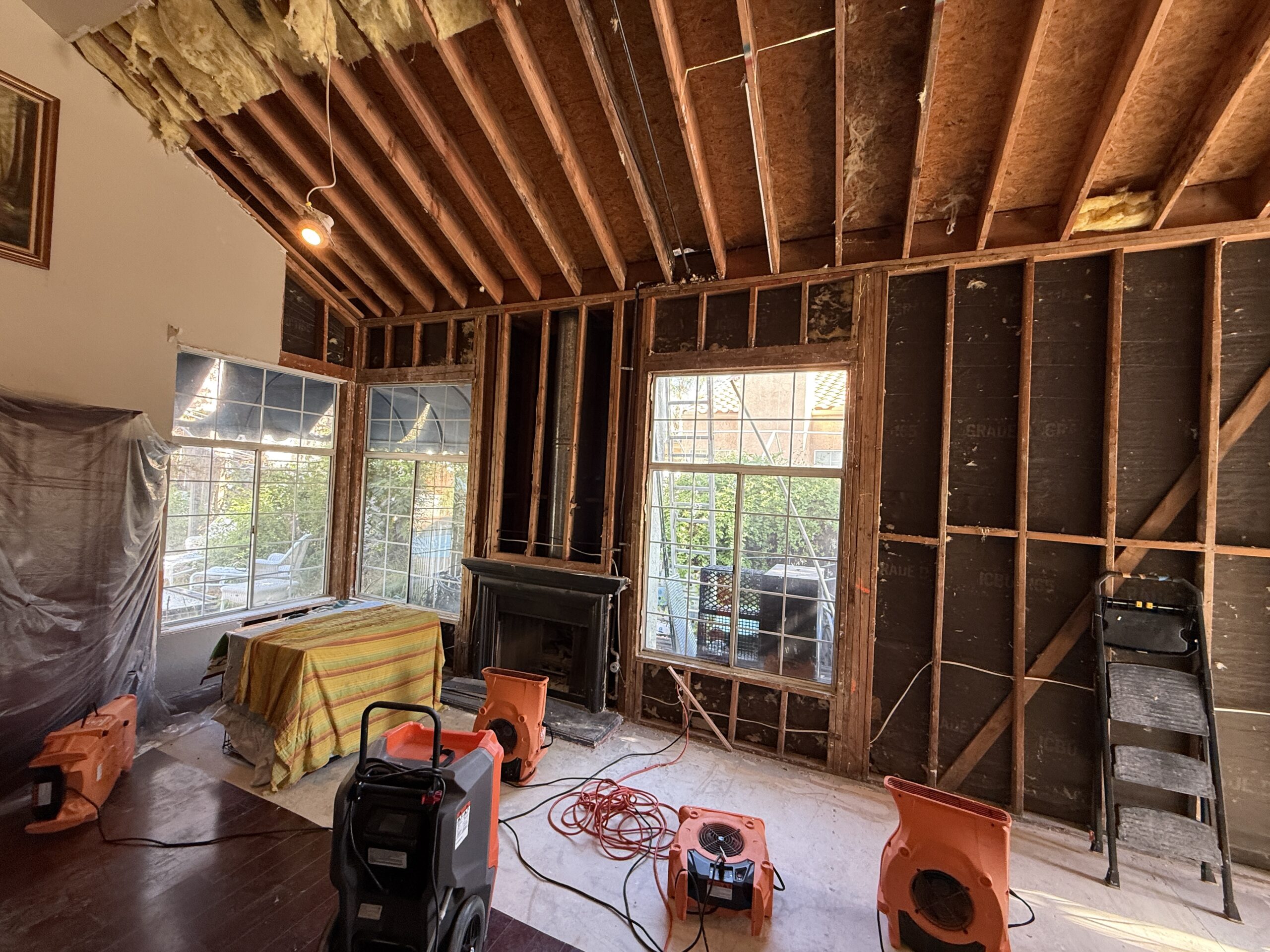
How Long Does Water Damage Restoration Take?
One of the first questions homeowners ask after discovering water damage is:
“How long will this take?”
The answer depends on several factors, including the amount of water involved, the affected building materials, and how quickly professional drying begins.
While every property is different, understanding the restoration timeline can help set realistic expectations and explain why acting quickly is so important.
Typical Water Damage Restoration Timeline
Day 1: Emergency Response
A professional restoration company typically begins by:
- Inspecting the property
- Locating the water source
- Measuring moisture levels
- Photographing the damage
- Extracting standing water
- Creating a drying plan
Early action helps reduce secondary damage.
Days 2–4: Structural Drying
Commercial drying equipment is used to remove moisture from:
- Drywall
- Wood framing
- Subfloors
- Cabinets
- Flooring
- Insulation (when appropriate)
Daily moisture readings are taken to monitor progress.
Days 3–5: Equipment Monitoring
Technicians return to:
- Record moisture readings
- Adjust equipment placement
- Verify drying goals are being met
- Remove equipment when materials are dry
Final Repairs
After mitigation is complete, reconstruction may include:
- Drywall replacement
- Painting
- Flooring installation
- Cabinet repairs or replacement
- Trim and baseboards
The repair phase varies depending on the scope of damage.
What Can Affect the Timeline?
Several factors influence how long restoration takes.
Type of Water
Clean water losses are often easier to restore than sewage or contaminated water events.
Size of the Affected Area
A small bathroom leak typically dries faster than water affecting multiple rooms.
Building Materials
Materials absorb moisture differently.
Examples include:
- Hardwood flooring
- Drywall
- Tile
- Carpet
- Concrete
- Cabinets
Each material has different drying characteristics.
Hidden Moisture
Water often travels behind:
- Walls
- Cabinets
- Flooring
- Baseboards
- Insulation
Professional moisture mapping helps locate areas that are not immediately visible.
Why You Shouldn’t Rush the Drying Process
One of the biggest mistakes homeowners make is assuming materials are dry because they no longer feel wet.
Professional drying relies on moisture measurements—not appearance.
Stopping the drying process too early can increase the risk of:
- Mold growth
- Warped flooring
- Odors
- Hidden structural damage
What an IICRC-Certified Restoration Professional Wants You to Know
Visible water is only part of the problem.
Moisture often migrates into framing, subfloors, drywall, and insulation. Professional moisture meters and thermal imaging help identify hidden moisture so materials can be dried to appropriate levels before reconstruction begins.
Frequently Asked Questions
Can water damage dry on its own?
Some moisture may evaporate naturally, but trapped moisture inside building materials often requires professional drying equipment.
Why do restoration companies check moisture every day?
Daily moisture readings help verify that materials are drying properly and determine when equipment can be safely removed.
Does drying always take three days?
No. Smaller losses may dry more quickly, while larger or more complex losses can take longer depending on the materials and extent of damage.
Can mold grow while a home is drying?
If moisture remains for an extended period, mold can begin developing. Prompt extraction and structural drying help reduce this risk.
Final Thoughts
Every water damage loss is different, but responding quickly and following a professional drying plan can significantly reduce repair costs and help protect your home from additional damage.