Tag: moisture meter

  • Why Your Floor Feels Dry Even When Water Is Still Trapped Underneath

    Why Your Floor Feels Dry Even When Water Is Still Trapped Underneath

    One of the most common misconceptions after a plumbing leak is believing the damage is gone once the floor feels dry. While the surface may no longer feel wet, moisture can remain trapped beneath flooring materials, inside the subfloor, or within nearby building materials.

    At Hurry Restoration, we frequently inspect homes where the visible water has disappeared, but moisture is still present beneath tile, hardwood, laminate, carpet, or cabinetry. Finding this hidden moisture early helps prevent additional damage and supports a more effective drying process.


    Quick Answer

    A floor can feel dry because surface moisture evaporates much faster than moisture trapped underneath. Water may remain beneath tile, hardwood, laminate, carpet padding, or inside the subfloor even when the top of the floor no longer feels wet. Professional moisture inspections help determine whether hidden moisture is still present.


    Key Takeaways

    • Dry surfaces do not always mean dry building materials.
    • Water often becomes trapped beneath finished flooring.
    • Hidden moisture may spread farther than expected.
    • Professional moisture mapping helps locate moisture beneath the surface.
    • Early detection can reduce additional damage.

    Why Floors Dry Unevenly

    Different building materials absorb and release moisture at different rates.

    Air moving across the surface helps dry the top layer first, while moisture trapped underneath has very little airflow. Because of this, water beneath flooring often remains long after the visible surface appears normal.


    Where Water Usually Becomes Trapped

    Hidden moisture is commonly found:

    • Beneath tile flooring
    • Under hardwood flooring
    • Inside laminate flooring systems
    • Under carpet padding
    • Within wood subfloors
    • Beneath cabinets
    • Around baseboards
    • Inside wall cavities next to flooring

    Why Tile Can Be Misleading

    Many homeowners assume tile cannot be damaged by water.

    While the tile itself is durable, water often enters through grout joints, expansion joints, plumbing penetrations, or cracks before becoming trapped beneath the tile installation.

    The surface may feel completely dry while moisture remains underneath.


    Hardwood Flooring Often Hides Moisture

    Wood naturally absorbs water.

    Moisture trapped beneath hardwood flooring can affect both the flooring and the wood subfloor below.

    In many situations, homeowners notice cupping or slight movement days after the original leak because moisture continues affecting the wood from underneath.


    Carpet May Feel Dry First

    Carpet fibers dry much faster than carpet padding.

    The top of the carpet can feel dry while the pad underneath remains saturated.

    This is one reason professional inspections evaluate more than just the visible surface.


    What We See in Real Homes

    During water damage inspections, one of the most common findings is moisture extending beneath flooring long after homeowners believe everything has dried.

    Water naturally follows gravity and travels beneath finished flooring where airflow is limited. Hidden moisture may not become visible until flooring begins to swell, separate, stain, or develop odors.

    Professional moisture mapping helps determine how far water has traveled before structural drying begins.


    How Professionals Detect Hidden Moisture

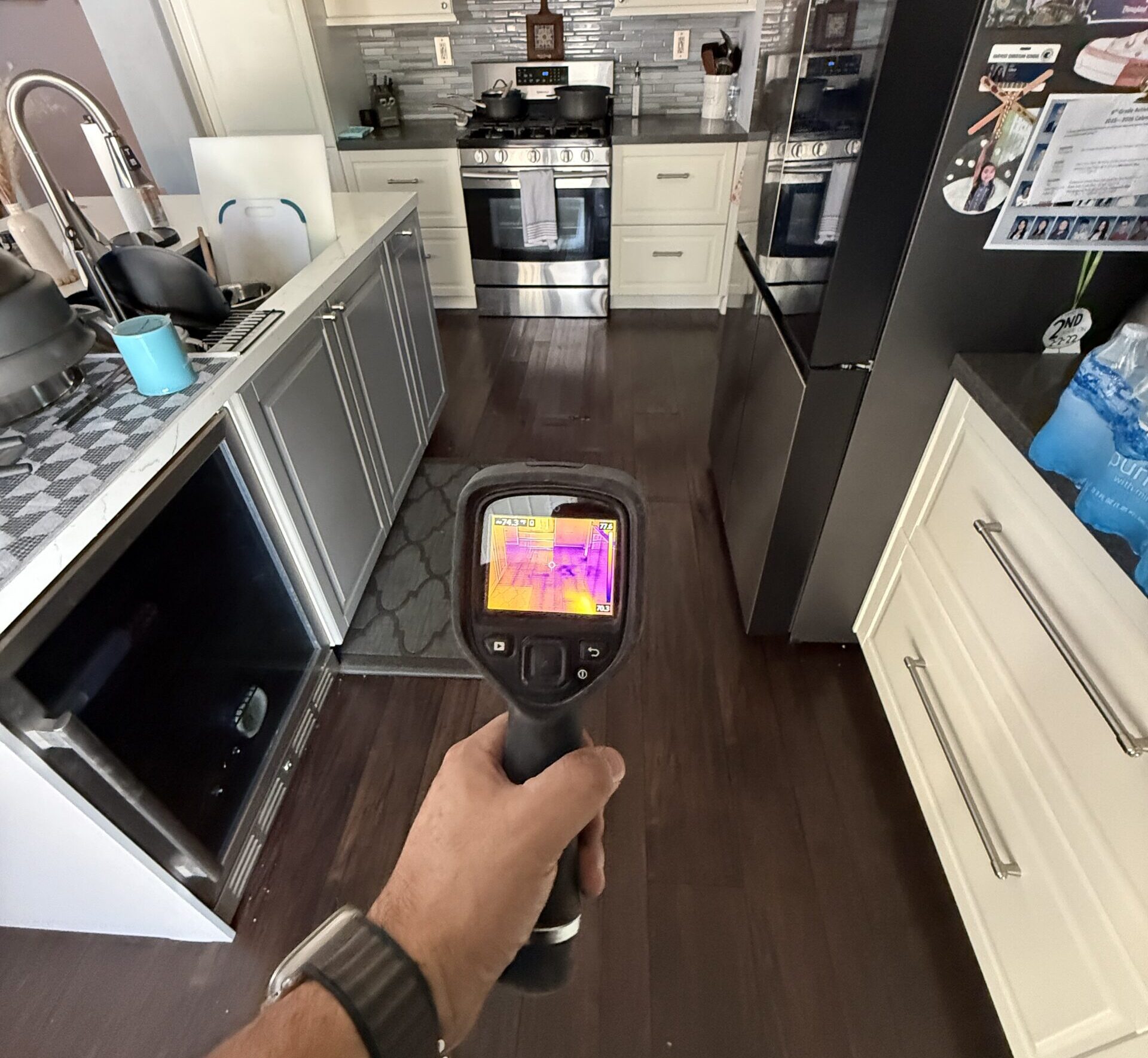
    Professional restoration companies use specialized equipment to inspect beneath the surface.

    Depending on the situation, this may include:

    • Moisture meters
    • Thermal imaging cameras
    • Hygrometers
    • Moisture mapping
    • Daily moisture monitoring

    These tools help determine whether hidden moisture remains inside the structure.


    Can Hidden Moisture Damage My Home?

    Yes.

    Moisture trapped beneath flooring may contribute to swelling, warping, material deterioration, and conditions that allow mold to develop if not properly addressed.

    Prompt inspection allows restoration professionals to determine the appropriate drying approach.


    Professional Insight from Hurry Restoration

    Throughout Riverside County and San Bernardino County, the Hurry Restoration team regularly finds hidden moisture beneath tile, hardwood, laminate flooring, and cabinetry after plumbing leaks, burst pipes, appliance failures, and water heater leaks.

    Although the floor may appear dry, moisture inspections often reveal water extending beyond the visible damage. Proper moisture mapping helps identify affected materials and supports an effective structural drying plan.


    Frequently Asked Questions

    Can tile be dry while water is underneath?

    Yes. Water can remain trapped beneath tile even after the surface has dried.


    Should I remove my flooring?

    Not necessarily. Every situation is different. A professional inspection helps determine whether flooring can be dried in place or whether removal is necessary.


    How long can water stay beneath flooring?

    The amount of time depends on the flooring material, the amount of water, indoor conditions, and how quickly drying begins.


    How do professionals know when materials are dry?

    Restoration professionals use moisture detection equipment and monitor moisture levels throughout the drying process to evaluate progress.


    Hidden Moisture Inspections Throughout Riverside & San Bernardino Counties

    Hurry Restoration provides emergency water damage inspections, moisture mapping, water extraction, and structural drying throughout Riverside County and San Bernardino County, including Riverside, Corona, Norco, Ontario, Rancho Cucamonga, Moreno Valley, and surrounding Inland Empire communities.

    If your floor feels dry but you suspect water may still be trapped underneath, a professional inspection can help determine the extent of the damage.


    About Hurry Restoration

    Hurry Restoration provides 24/7 emergency water damage restoration, water extraction, structural drying, and moisture inspections throughout Riverside County and San Bernardino County. We use professional moisture detection equipment to help identify hidden water damage after plumbing leaks, burst pipes, appliance failures, and other water-related emergencies.


    📞 Call Hurry Restoration 24/7

    If your flooring appears dry but you suspect hidden moisture remains underneath, don’t wait for visible damage to appear.

    Call Hurry Restoration 24/7
  • Hidden Water Damage: 9 Places Moisture Hides After a Plumbing Leak | Hurry Restoration

    Hidden Water Damage: 9 Places Moisture Hides After a Plumbing Leak | Hurry Restoration

    Most homeowners expect to see water damage where a leak occurs. In reality, water rarely stays in one place. After a plumbing leak, burst pipe, appliance failure, or water heater leak, moisture often travels beneath flooring, inside walls, behind cabinets, and into areas that cannot be seen without a professional inspection.

    At Hurry Restoration, one of the most common discoveries during emergency water damage inspections is hidden moisture extending well beyond the visible damage. Understanding where water travels helps homeowners act quickly and reduces the risk of additional structural damage and mold growth.


    Quick Answer

    If your home experiences a plumbing leak, assume water has spread farther than what is visible. Moisture commonly hides beneath flooring, behind drywall, inside insulation, underneath cabinets, behind baseboards, and inside wall cavities. Professional moisture mapping helps identify hidden water so affected materials can be properly dried before secondary damage occurs.


    Key Takeaways

    • Water often spreads well beyond the visible wet area.
    • Dry surfaces do not always mean dry building materials.
    • Hidden moisture can remain trapped beneath flooring and inside walls.
    • Professional moisture mapping identifies damage that cannot be seen.
    • Acting quickly may reduce repair costs and the likelihood of mold growth.

    Why Hidden Water Damage Matters

    Many homeowners clean up visible water and assume the problem has been solved. Unfortunately, building materials absorb moisture differently. Water follows gravity, travels through framing, and can become trapped inside materials that dry very slowly.

    By the time visible staining appears, moisture may have already spread into surrounding areas.

    This is why professional restoration focuses on locating the full extent of the water intrusion—not just the water you can see.


    1. Beneath Tile Flooring

    Although tile is water resistant, grout joints, cracked grout, and movement joints allow water to travel underneath the tile.

    Moisture beneath tile can remain trapped long after the surface appears dry, especially after slab leaks, plumbing failures, or appliance leaks.


    2. Behind Baseboards

    Baseboards often conceal moisture because drywall absorbs water from the floor upward.

    Removing or temporarily detaching baseboards frequently reveals moisture hidden behind finished surfaces.


    3. Inside Drywall

    Drywall quickly absorbs water.

    Moisture may continue moving several feet above the original water line through capillary action, making professional moisture testing an important part of the inspection process.


    4. Inside Wall Cavities

    Water commonly travels inside wall cavities before it becomes visible.

    Insulation, plumbing penetrations, electrical openings, and framing all create pathways that allow moisture to spread throughout the structure.


    5. Behind Water Heaters

    Water heaters are one of the most overlooked areas following a plumbing leak.

    Because the appliance blocks the wall from view, moisture can remain trapped behind it for extended periods without being noticed.

    Hidden moisture behind a water heater may affect drywall, framing, insulation, and adjacent flooring before visible signs appear.


    Real Project Example

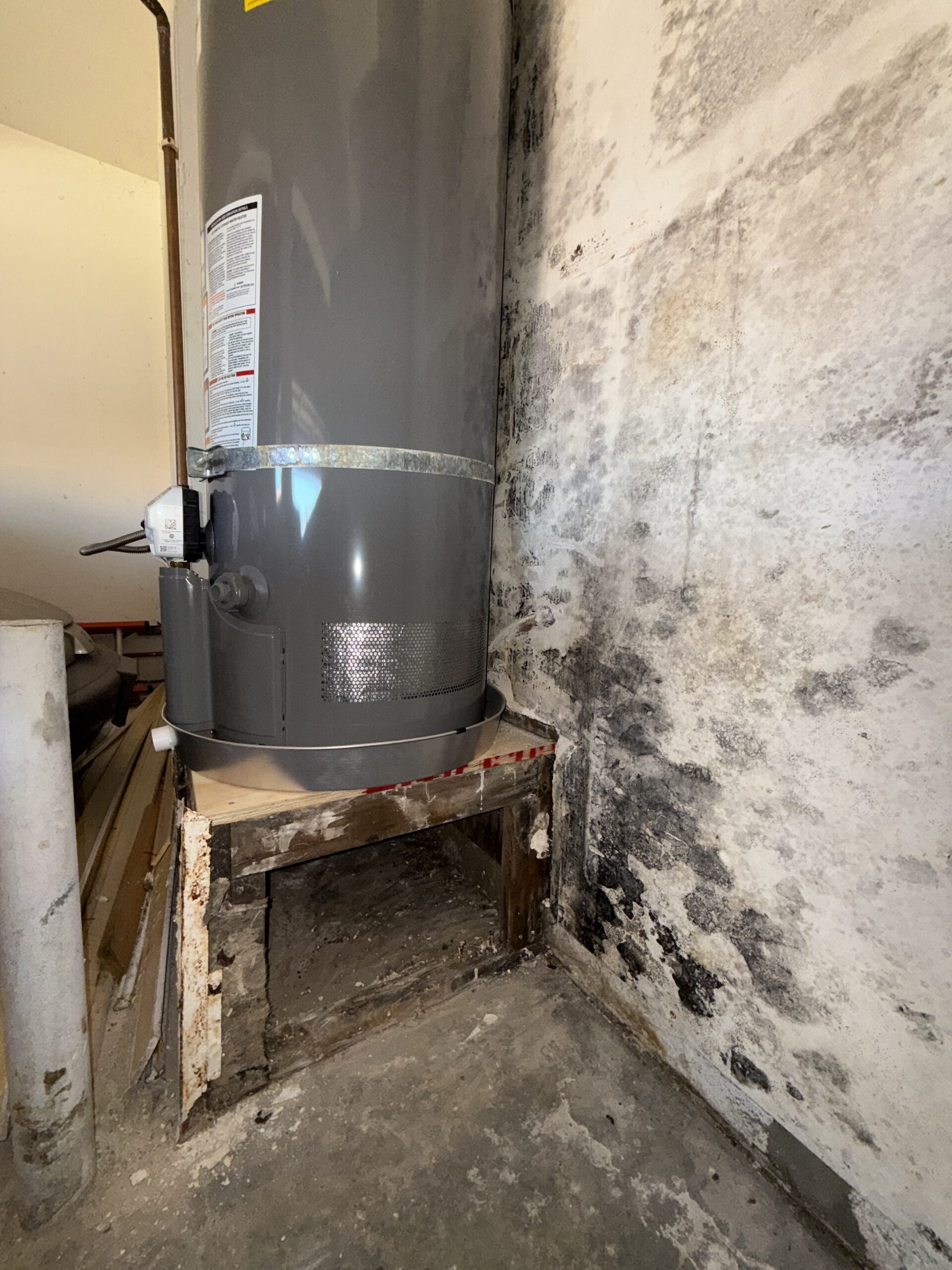
    The photo featured in this article shows hidden water damage discovered after a residential water heater was removed during an inspection.

    While the front of the water heater appeared relatively normal, removing the appliance exposed significant hidden moisture damage and visible microbial growth behind the unit. Situations like this demonstrate why professional inspections often extend beyond the visibly wet area to evaluate concealed building materials.

    Hidden damage like this is one reason moisture mapping is an important part of a professional restoration assessment.


    6. Beneath Cabinets

    Kitchen and bathroom cabinets frequently conceal moisture.

    Water often becomes trapped beneath cabinet bases, behind toe kicks, and underneath flooring where airflow is limited.


    7. Under Hardwood Flooring

    Hardwood flooring absorbs moisture from below.

    Even when the finished surface looks normal, the underside of the flooring and the wood subfloor may still contain elevated moisture levels.


    8. Carpet Padding

    Carpet may begin drying on the surface while the padding underneath remains saturated.

    Depending on the extent of the damage and the category of water involved, professional drying or replacement may be necessary.


    9. Ceiling Cavities

    Water from upstairs plumbing leaks, overflowing fixtures, or roof leaks often spreads through ceiling cavities before stains become visible.

    By the time discoloration appears, moisture may have already affected insulation and structural framing.


    What We See in Real Homes

    One of the biggest misconceptions homeowners have is believing the visible water represents the entire loss.

    During inspections throughout Riverside and San Bernardino Counties, we regularly find moisture extending beyond the obvious wet area. Water often follows framing, flooring systems, plumbing penetrations, and gravity before eventually becoming visible somewhere else.

    This is why moisture mapping is one of the most important steps during a professional inspection.


    How Professionals Find Hidden Water Damage

    Professional restoration companies use specialized equipment to evaluate areas that cannot be inspected visually.

    Depending on the property and type of loss, this may include:

    • Moisture meters
    • Thermal imaging cameras
    • Hygrometers
    • Moisture mapping documentation
    • Daily moisture monitoring during structural drying

    These tools help restoration professionals determine where water has traveled and monitor the drying process.


    Can Hidden Water Damage Cause Mold?

    Yes.

    If moisture remains trapped inside drywall, insulation, flooring, or framing for an extended period, mold growth can become a concern.

    Prompt inspection and proper structural drying reduce the likelihood of moisture-related secondary damage.


    Professional Insight from Hurry Restoration

    Throughout Riverside County and San Bernardino County, the Hurry Restoration team frequently discovers hidden moisture behind water heaters, beneath flooring, inside wall cavities, behind baseboards, and underneath cabinetry after plumbing leaks and appliance failures.

    Every property is different. Identifying where water has traveled is one of the most important steps in developing an effective drying plan and helping homeowners restore their property after water damage.


    Frequently Asked Questions

    Can my walls still be wet if they look dry?

    Yes. Drywall and insulation can retain hidden moisture even when the painted surface appears completely dry.


    Does water always stay in one room?

    No. Water commonly follows gravity and building materials into adjacent rooms, flooring systems, lower levels, and wall cavities.


    How do professionals detect hidden moisture?

    Professional restoration companies use moisture meters, thermal imaging when appropriate, hygrometers, and moisture mapping techniques to evaluate the extent of water intrusion.


    Should I remove drywall if I suspect hidden moisture?

    The appropriate response depends on the situation. A professional inspection can help determine whether materials can be dried in place or whether removal is necessary.


    Hidden Water Damage Inspections Throughout Riverside & San Bernardino Counties

    Hurry Restoration provides emergency water damage restoration, moisture inspections, structural drying, and water extraction throughout Riverside County and San Bernardino County, including Riverside, Corona, Norco, Ontario, Rancho Cucamonga, Moreno Valley, and surrounding Inland Empire communities.

    If you suspect hidden moisture after a plumbing leak, burst pipe, appliance failure, or water heater leak, a professional inspection can help determine the extent of the damage.


    About Hurry Restoration

    Hurry Restoration provides 24/7 emergency water damage restoration, water extraction, structural drying, moisture inspections, and mold prevention services throughout Riverside County and San Bernardino County. Our team uses professional moisture detection equipment to identify hidden water damage and develop effective drying plans after plumbing leaks, burst pipes, appliance failures, and other water-related emergencies.


    📞 Call Hurry Restoration 24/7

    If you suspect hidden water damage behind walls, beneath flooring, or around your water heater, don’t rely on visible signs alone.

    Call Hurry Restoration at 1-800-528-9110 for emergency water damage restoration, moisture inspections, water extraction, and structural drying throughout Riverside County and San Bernardino County.