
Tag: hidden moisture

  • How Long Can Drywall Stay Wet Before Mold Grows?

    How Long Can Drywall Stay Wet Before Mold Grows?

    Quick Answer

    Drywall can begin developing mold within 24 to 48 hours after becoming wet. Because drywall absorbs moisture quickly, hidden water can remain trapped behind walls even when the surface appears dry. Professional drying and moisture inspections are the best way to reduce mold growth and prevent expensive structural damage.


    Key Takeaways

    • Mold can begin growing in as little as 24–48 hours
    • Drywall absorbs water extremely quickly.
    • Hidden moisture often remains inside walls.
    • Professional moisture mapping finds water you cannot see.
    • Fast structural drying can reduce demolition and mold damage.

    Why Drywall Gets Wet So Fast

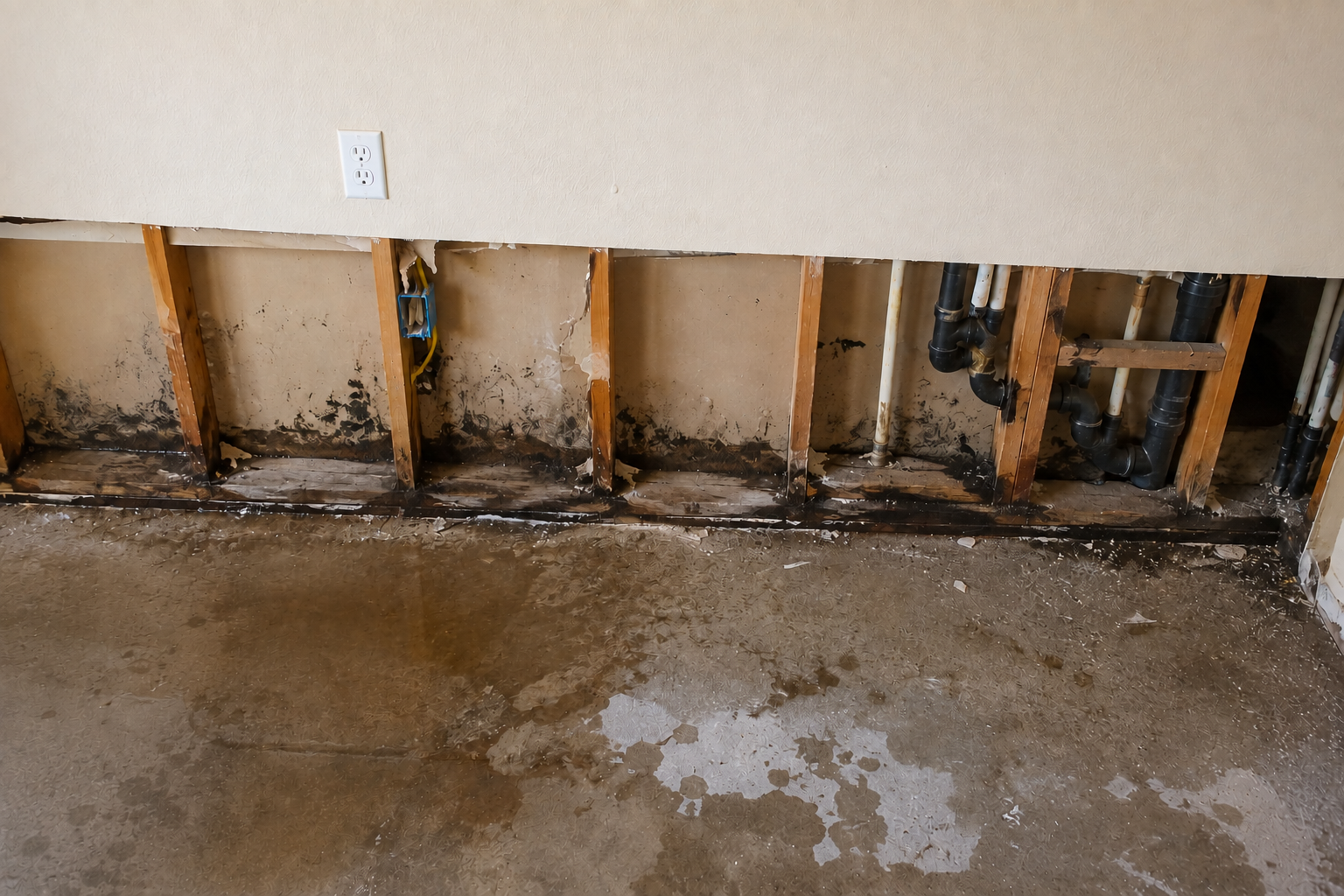
    Drywall is made from gypsum wrapped in heavy paper. While it’s durable for everyday living, it’s highly absorbent after a plumbing leak, slab leak, roof leak, appliance failure, or flood.

    Once moisture enters drywall, it begins soaking into:

    • The paper facing
    • The gypsum core
    • Adjacent insulation
    • Wood framing

    This trapped moisture creates ideal conditions for mold growth if it is not professionally dried.


    How Long Before Mold Starts Growing?

    Most restoration professionals agree that mold can begin growing within 24 to 48 hours when moisture remains.

    The exact timeline depends on:

    • Temperature
    • Humidity
    • Air movement
    • Amount of water
    • Building materials
    • How quickly drying begins

    Warm Southern California homes can create conditions where mold develops surprisingly fast.


    What We See in Real Homes

    One of the biggest misconceptions homeowners have is believing the wall is dry simply because it feels dry.

    In reality, we frequently find:

    • Wet insulation
    • Moisture behind baseboards
    • Water trapped behind cabinets
    • Saturated framing
    • Hidden moisture around electrical outlets

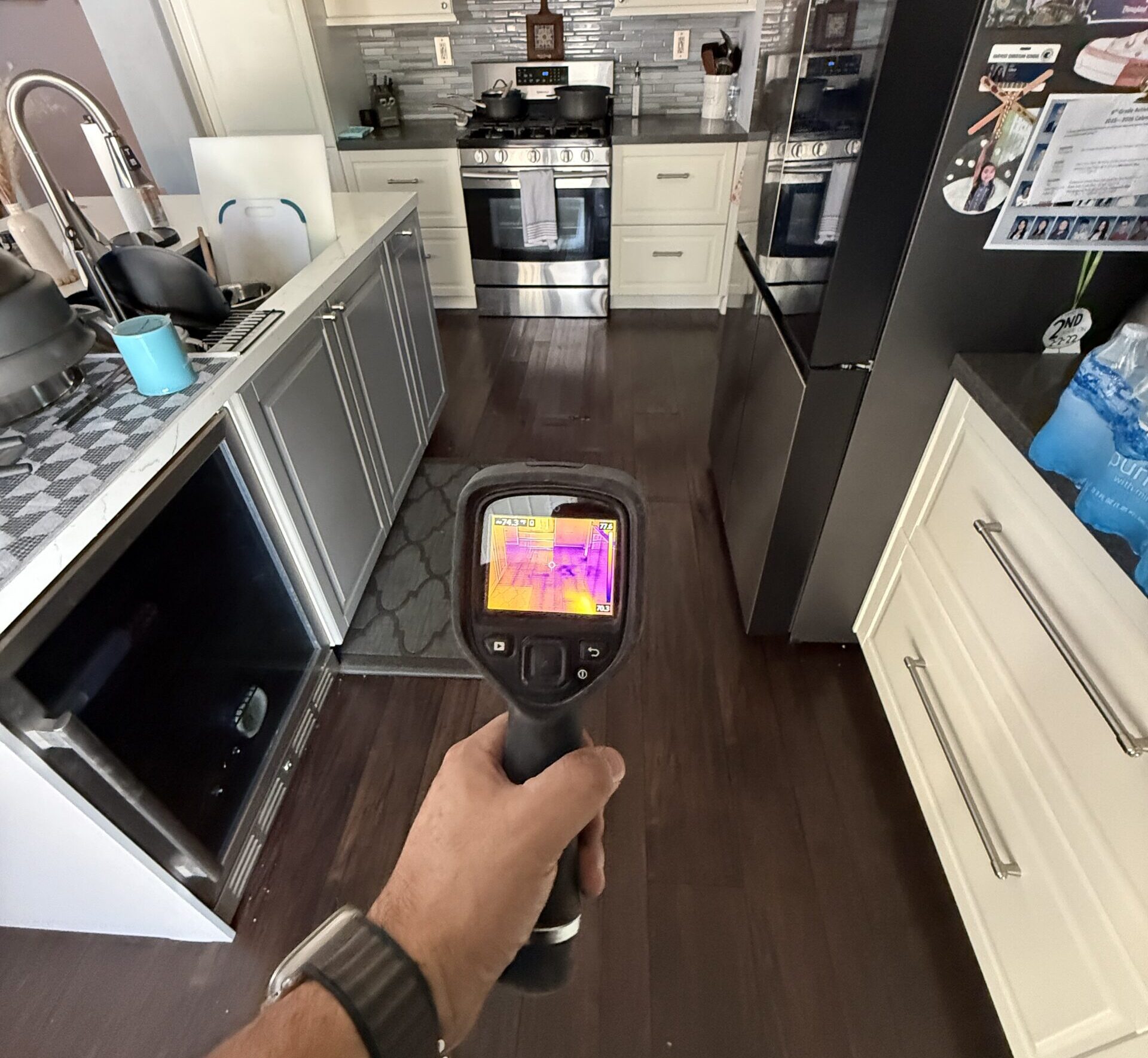
    Using professional moisture meters and thermal imaging cameras allows us to locate moisture that would otherwise remain hidden until mold appears weeks later.


    Warning Signs Your Drywall Is Still Wet

    Common signs include:

    • Bubbling paint
    • Soft drywall
    • Musty odors
    • Brown staining
    • Peeling paint
    • Swollen baseboards
    • Warped trim
    • Visible mold

    If you notice any of these after water damage, your home should be inspected immediately.


    Can Wet Drywall Be Saved?

    Sometimes.

    If professional drying begins immediately after water damage, drywall can often be successfully dried without replacement.

    However, replacement is usually recommended when:

    • Mold has already developed
    • Drywall has remained wet several days
    • Sewage contaminated the wall
    • Flood water entered the home

    Moisture readings determine whether the drywall has safely dried.


    How Professionals Dry Wet Drywall

    Professional restoration companies use commercial equipment including:

    • Industrial dehumidifiers
    • High-velocity air movers
    • Moisture meters
    • Thermal imaging cameras
    • HEPA air scrubbers when needed

    The goal is removing moisture before mold has an opportunity to spread.


    Frequently Asked Questions

    Can drywall dry by itself?

    Sometimes, but hidden moisture often remains trapped inside wall cavities.


    Will mold always grow?

    Not always. Quick drying greatly reduces the chances of mold growth.


    Should drywall always be removed?

    No. Moisture testing determines whether drying is possible or replacement is necessary.


    Does homeowners insurance cover wet drywall?

    Coverage depends on what caused the water damage and your individual homeowners insurance policy.


    Protect Your Home Before Mold Starts

    The sooner water damage is addressed, the easier it is to prevent mold growth and reduce repair costs.

    If your drywall has become wet, professional moisture inspections can determine whether hidden moisture remains before it becomes a much larger problem.


    About Hurry Restoration

    Hurry Restoration provides 24/7 emergency water damage restoration, structural drying, mold remediation, sewage cleanup, fire damage restoration, and reconstruction throughout Riverside County, Orange County, Los Angeles County, and San Diego County. Our IICRC-certified technicians use advanced moisture detection equipment and commercial drying systems to restore homes and businesses quickly while working directly with insurance companies to simplify the claims process.


    📞 Call Hurry Restoration 24/7

    Water damage doesn’t wait—and neither do we.

    Call Now: (800) 528-9110
  • Why Your Floor Feels Dry Even When Water Is Still Trapped Underneath

    Why Your Floor Feels Dry Even When Water Is Still Trapped Underneath

    One of the most common misconceptions after a plumbing leak is believing the damage is gone once the floor feels dry. While the surface may no longer feel wet, moisture can remain trapped beneath flooring materials, inside the subfloor, or within nearby building materials.

    At Hurry Restoration, we frequently inspect homes where the visible water has disappeared, but moisture is still present beneath tile, hardwood, laminate, carpet, or cabinetry. Finding this hidden moisture early helps prevent additional damage and supports a more effective drying process.


    Quick Answer

    A floor can feel dry because surface moisture evaporates much faster than moisture trapped underneath. Water may remain beneath tile, hardwood, laminate, carpet padding, or inside the subfloor even when the top of the floor no longer feels wet. Professional moisture inspections help determine whether hidden moisture is still present.


    Key Takeaways

    • Dry surfaces do not always mean dry building materials.
    • Water often becomes trapped beneath finished flooring.
    • Hidden moisture may spread farther than expected.
    • Professional moisture mapping helps locate moisture beneath the surface.
    • Early detection can reduce additional damage.

    Why Floors Dry Unevenly

    Different building materials absorb and release moisture at different rates.

    Air moving across the surface helps dry the top layer first, while moisture trapped underneath has very little airflow. Because of this, water beneath flooring often remains long after the visible surface appears normal.


    Where Water Usually Becomes Trapped

    Hidden moisture is commonly found:

    • Beneath tile flooring
    • Under hardwood flooring
    • Inside laminate flooring systems
    • Under carpet padding
    • Within wood subfloors
    • Beneath cabinets
    • Around baseboards
    • Inside wall cavities next to flooring

    Why Tile Can Be Misleading

    Many homeowners assume tile cannot be damaged by water.

    While the tile itself is durable, water often enters through grout joints, expansion joints, plumbing penetrations, or cracks before becoming trapped beneath the tile installation.

    The surface may feel completely dry while moisture remains underneath.


    Hardwood Flooring Often Hides Moisture

    Wood naturally absorbs water.

    Moisture trapped beneath hardwood flooring can affect both the flooring and the wood subfloor below.

    In many situations, homeowners notice cupping or slight movement days after the original leak because moisture continues affecting the wood from underneath.


    Carpet May Feel Dry First

    Carpet fibers dry much faster than carpet padding.

    The top of the carpet can feel dry while the pad underneath remains saturated.

    This is one reason professional inspections evaluate more than just the visible surface.


    What We See in Real Homes

    During water damage inspections, one of the most common findings is moisture extending beneath flooring long after homeowners believe everything has dried.

    Water naturally follows gravity and travels beneath finished flooring where airflow is limited. Hidden moisture may not become visible until flooring begins to swell, separate, stain, or develop odors.

    Professional moisture mapping helps determine how far water has traveled before structural drying begins.


    How Professionals Detect Hidden Moisture

    Professional restoration companies use specialized equipment to inspect beneath the surface.

    Depending on the situation, this may include:

    • Moisture meters
    • Thermal imaging cameras
    • Hygrometers
    • Moisture mapping
    • Daily moisture monitoring

    These tools help determine whether hidden moisture remains inside the structure.


    Can Hidden Moisture Damage My Home?

    Yes.

    Moisture trapped beneath flooring may contribute to swelling, warping, material deterioration, and conditions that allow mold to develop if not properly addressed.

    Prompt inspection allows restoration professionals to determine the appropriate drying approach.


    Professional Insight from Hurry Restoration

    Throughout Riverside County and San Bernardino County, the Hurry Restoration team regularly finds hidden moisture beneath tile, hardwood, laminate flooring, and cabinetry after plumbing leaks, burst pipes, appliance failures, and water heater leaks.

    Although the floor may appear dry, moisture inspections often reveal water extending beyond the visible damage. Proper moisture mapping helps identify affected materials and supports an effective structural drying plan.


    Frequently Asked Questions

    Can tile be dry while water is underneath?

    Yes. Water can remain trapped beneath tile even after the surface has dried.


    Should I remove my flooring?

    Not necessarily. Every situation is different. A professional inspection helps determine whether flooring can be dried in place or whether removal is necessary.


    How long can water stay beneath flooring?

    The amount of time depends on the flooring material, the amount of water, indoor conditions, and how quickly drying begins.


    How do professionals know when materials are dry?

    Restoration professionals use moisture detection equipment and monitor moisture levels throughout the drying process to evaluate progress.


    Hidden Moisture Inspections Throughout Riverside & San Bernardino Counties

    Hurry Restoration provides emergency water damage inspections, moisture mapping, water extraction, and structural drying throughout Riverside County and San Bernardino County, including Riverside, Corona, Norco, Ontario, Rancho Cucamonga, Moreno Valley, and surrounding Inland Empire communities.

    If your floor feels dry but you suspect water may still be trapped underneath, a professional inspection can help determine the extent of the damage.


    About Hurry Restoration

    Hurry Restoration provides 24/7 emergency water damage restoration, water extraction, structural drying, and moisture inspections throughout Riverside County and San Bernardino County. We use professional moisture detection equipment to help identify hidden water damage after plumbing leaks, burst pipes, appliance failures, and other water-related emergencies.


    📞 Call Hurry Restoration 24/7

    If your flooring appears dry but you suspect hidden moisture remains underneath, don’t wait for visible damage to appear.

    Call Hurry Restoration 24/7