A major water leak inside a rental property can create serious complications—especially when new tenants are preparing to move in. Flooring may look dry from the surface while moisture remains trapped underneath, potentially affecting the underlayment, subfloor, baseboards and nearby walls.
Hurry Restoration was recently contacted by the owner of a rental property in Corona, California, after a major leak affected laminate flooring and carpeted areas. The owner called before the new tenants moved in so the damage could be professionally inspected and the property could be evaluated before occupancy.
For property owners and managers, this situation demonstrates why water damage should be addressed immediately, even when the visible water has already been removed.
Quick Answer: What Should a Corona Property Owner Do After a Major Leak?
After discovering water damage, safely stop the water source if possible, photograph the affected areas, avoid removing materials before documentation is completed and schedule a professional moisture inspection immediately.
Laminate flooring and carpet can conceal moisture underneath their visible surfaces. Professional moisture testing helps determine whether the flooring, carpet padding, subfloor, baseboards or walls have been affected.
If the loss may be covered by insurance, the property owner should also notify the carrier promptly and preserve photographs, inspection findings and restoration documentation.
Corona Rental-Property Water Damage: Project Overview
This property was being prepared for new tenants when the owner discovered that a major leak had affected multiple flooring materials.
The visible damage involved:
- Laminate flooring
- Carpeted areas
- Materials underneath the finished flooring
- Potentially affected adjoining building materials
Because the property was between occupants, the owner had an important opportunity to have the damage evaluated before furniture and tenant belongings were moved into the affected areas.
Water can travel beyond the location where it first becomes visible. It may move underneath floating laminate flooring, through carpet padding, along subfloor seams and into nearby baseboards or wall cavities. Determining the complete extent of the loss requires more than a visual inspection.
Why Water Under Laminate Flooring Requires Immediate Attention
Laminate flooring normally consists of a wear layer, decorative layer, fiberboard core and backing layer. When water reaches the seams or becomes trapped underneath the flooring, the core can absorb moisture and begin swelling.
Possible signs of laminate water damage include:
- Raised or separating seams
- Swollen plank edges
- Buckling or movement
- Discoloration
- Soft areas underneath the floor
- Moisture trapped beneath flooring that still appears normal
A dry-looking surface does not confirm that the assembly underneath is dry. Moisture testing is necessary to determine whether water has reached the underlayment or subfloor.
Whether laminate flooring can remain in place depends on the amount of water, duration of exposure, condition of the planks and moisture present underneath. When the core has swollen or water is trapped below the flooring, removal may be necessary to access and dry the underlying materials properly.
Can Water-Damaged Carpet Be Saved?
The answer depends on several factors:
- The source and category of the water
- How long the carpet remained wet
- Whether the padding was saturated
- Whether contamination is present
- The condition of the carpet and subfloor
- Whether the materials can be dried safely
Clean water from a recent supply-line failure may be handled differently from water involving sewage, drain backups or other contamination. Carpet padding can hold substantial moisture and may remain wet even when the carpet surface no longer feels saturated.
A professional assessment helps determine which materials can be dried and which should be removed. Restoration decisions should be based on moisture readings, the water category and the actual condition of the materials—not appearance alone.
Why the Subfloor and Nearby Walls Must Be Checked
Finished flooring is only the visible portion of the affected assembly. Water may also reach:
- Carpet padding
- Flooring underlayment
- Wood or concrete subfloors
- Baseboards
- Drywall
- Wall insulation
- Cabinets or built-in components
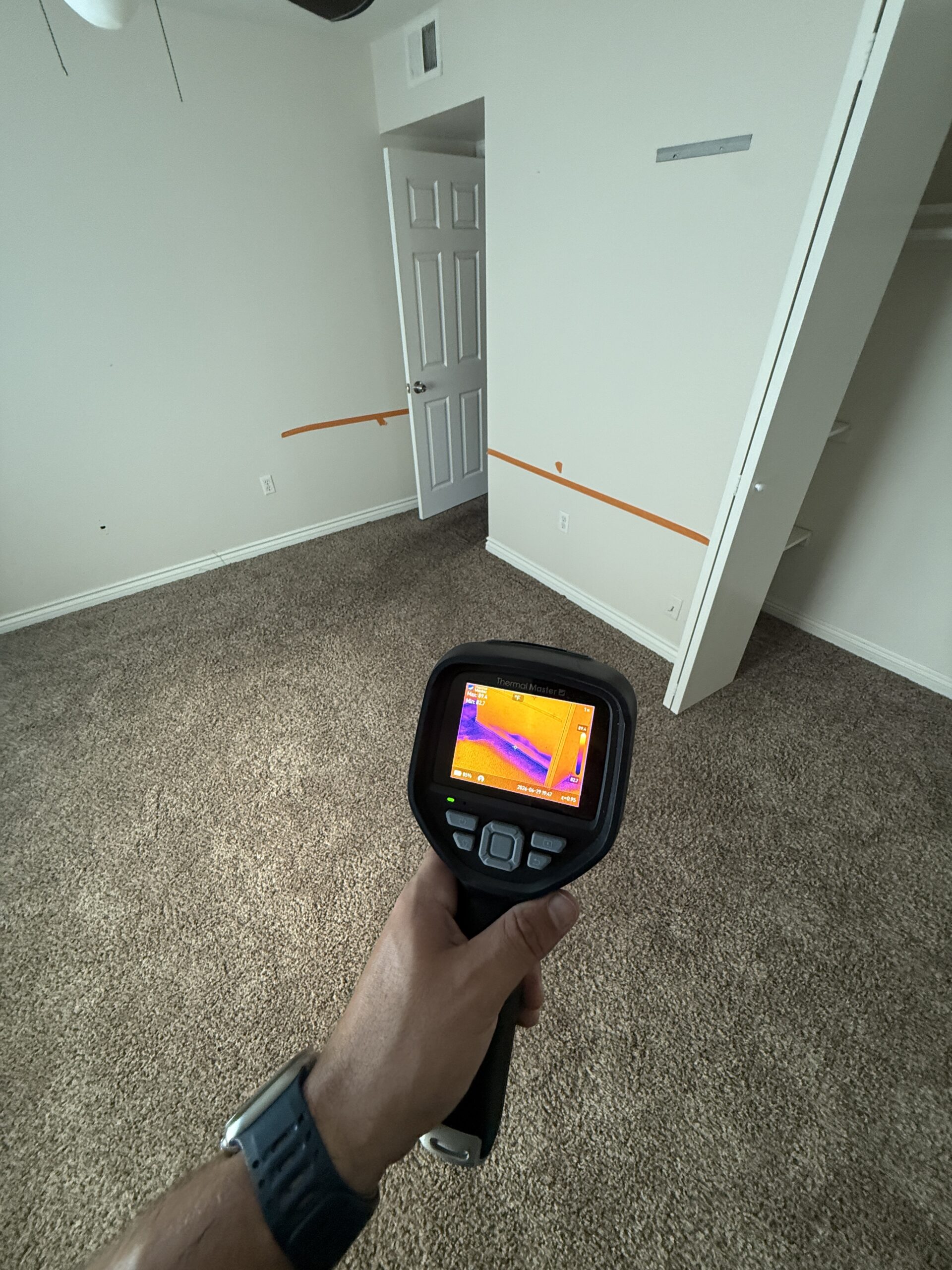
Moisture meters and thermal-imaging equipment can help identify areas requiring further investigation. These tools do not replace professional judgment, but they help restoration technicians develop a more complete moisture map of the property.
Identifying hidden moisture early can reduce the risk of swollen materials, odors, microbial growth and more extensive reconstruction later.
Why Fast Water-Damage Response Matters in Corona
Wet building materials should not be left untreated. Under suitable conditions, microbial growth may begin developing within approximately 24 to 48 hours.
Warm conditions, enclosed flooring assemblies and limited airflow beneath laminate or carpet padding can make trapped moisture particularly concerning. Prompt inspection and structural drying help protect the subfloor and surrounding materials before the damage becomes more extensive.
Property owners should not rely solely on household fans or the apparent dryness of the flooring surface. Professional drying involves controlling moisture, airflow, temperature and humidity while monitoring the affected materials until appropriate drying goals are reached.
What a Professional Water-Damage Inspection Should Include
A professional inspection may include:
- Identifying whether the water source has been stopped
- Determining the water category and potential contamination
- Documenting visible damage with photographs
- Testing flooring, walls, baseboards and adjoining materials
- Creating a moisture map of the affected areas
- Determining which materials can be dried
- Identifying materials that may require removal
- Developing an appropriate drying and restoration plan
- Monitoring moisture levels during the drying process
- Maintaining documentation for the property owner and insurance carrier
The restoration plan should be based on the conditions found at that specific property. Not every water loss requires the same demolition, equipment or drying period.
Does Insurance Cover Water Damage at a Rental Property?
Insurance coverage depends on the policy, the cause of the leak and how the damage occurred.
Sudden and accidental water damage—such as an unexpected supply-line or appliance failure—may be covered under many property-insurance policies. Long-term seepage, deferred maintenance and repeated leakage may be treated differently or excluded.
Property owners should:
- Photograph and video the affected areas
- Document when the damage was discovered
- Preserve information about the suspected source
- Avoid discarding damaged materials before proper documentation
- Obtain a professional inspection
- Contact their insurance carrier promptly
- Keep all moisture readings, photographs, estimates and invoices
Hurry Restoration provides detailed restoration documentation and can communicate the technical scope of the water damage with the assigned insurance adjuster. Coverage decisions ultimately remain with the insurance carrier and the terms of the policy.
Why Rental Properties Require Careful Documentation
Water damage at a rental property affects more than the building materials. Owners may also need to consider tenant move-in dates, habitability, access, repair scheduling and insurance documentation.
Addressing the loss before occupancy can make inspection and restoration easier because technicians have clearer access to the affected areas. It also allows the owner to understand the condition of the property before tenants and personal belongings enter the space.
A properly documented restoration file may include:
- Initial-loss photographs
- Moisture readings
- Thermal images
- Affected-material documentation
- Equipment records
- Daily monitoring information
- Drying progress
- Removal and repair recommendations
- Final moisture verification
This creates a clear record of what was found and how the property was addressed.
Local Water Damage Restoration in Corona, California
Hurry Restoration provides emergency water-damage inspection, extraction, structural drying and restoration services throughout Corona, Riverside County and the Inland Empire.
Our team works with homeowners, rental-property owners, property managers and insurance adjusters to document the damage, determine the appropriate restoration scope and help move the property toward a safe, dry condition.
Services include:
- Emergency water extraction
- Moisture detection and mapping
- Laminate and flooring assessment
- Carpet and padding evaluation
- Structural drying
- Dehumidification
- Controlled material removal when necessary
- Insurance documentation
- Reconstruction and finish repairs
If you have discovered water underneath laminate flooring or carpet in Corona, do not wait for the materials to dry on their own. Moisture may remain trapped underneath long after the visible surface appears dry.
Frequently Asked Questions
How quickly should water damage be inspected?
Water damage should be evaluated immediately. The longer moisture remains trapped inside flooring or building materials, the greater the possibility of swelling, odors, microbial growth and additional property damage.
Can laminate flooring dry without being removed?
Sometimes, but it depends on the extent of moisture and the flooring’s condition. If water is trapped underneath the laminate or the fiberboard core has swollen, removal may be required to access the wet materials below.
Does wet carpet always need to be replaced?
No. The decision depends on the water category, duration of exposure, condition of the carpet, saturation of the padding and whether the materials can be dried safely.
Can moisture remain underneath flooring after the surface feels dry?
Yes. Laminate, underlayment, carpet padding and subfloor materials can retain moisture after the visible surface appears dry. Moisture testing is required to confirm the condition underneath.
Does Hurry Restoration work with insurance companies?
Hurry Restoration documents water damage with photographs, moisture readings and detailed restoration information. We can communicate the technical scope with the assigned adjuster and provide insurance-ready estimates and supporting documentation.
Need Water Damage Restoration in Corona, CA?
If a leak has affected laminate flooring, carpet, walls or other building materials at your Corona property, call Hurry Restoration for a professional inspection.
We provide 24/7 water-damage response throughout Corona, Riverside County and the Inland Empire.
Call 1-800-528-9110 for immediate assistance.